If you run a seasonal business—a northern outfitter, a lakeside lodge, a cold-climate farm stand, a ski-town gear shop—you already know that your customers are not one audience. A local who shops with you year-round has completely different needs than a visitor who found you during peak season and hasn’t heard from you since. Sending the same newsletter to both is not just inefficient; it actively erodes trust with the people who matter most.
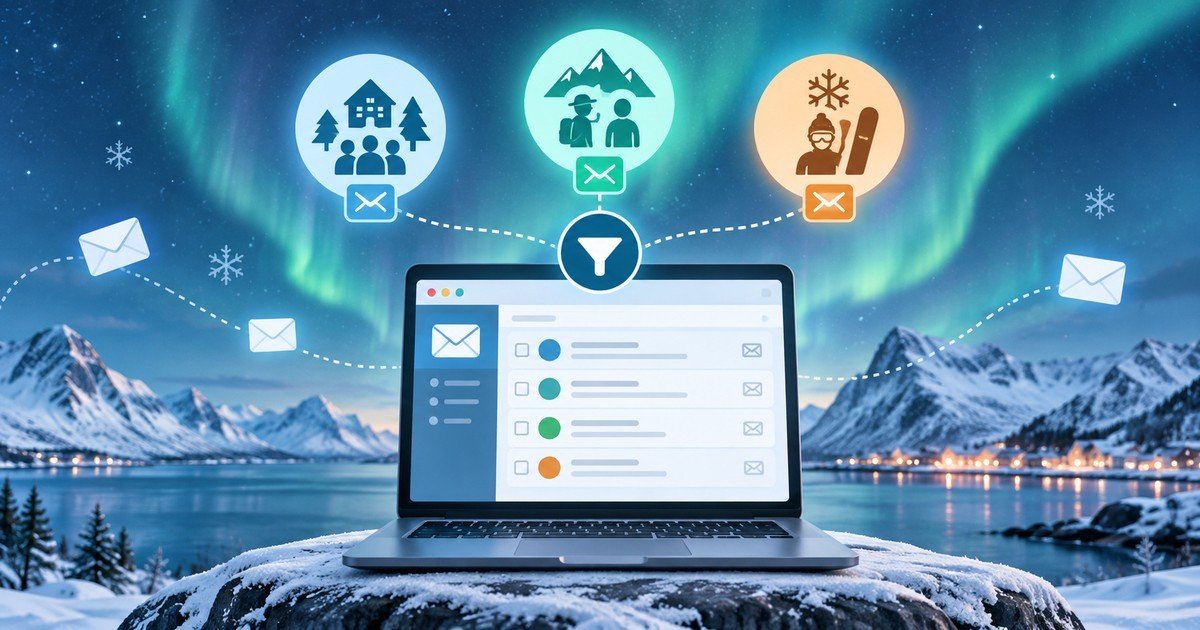
Email list segmentation for seasonal businesses is the practice of dividing your subscriber list into groups based on customer relationship and timing, then sending each group messages that actually match where they are. This guide walks through a practical framework you can implement without a large marketing team or expensive automation software.
Why One Email Audience Creates Mismatched Seasonal Messages
Most small seasonal businesses start with a single list. Everyone who signs up—locals, summer visitors, one-time buyers, loyal regulars—lands in the same place and receives the same message. During peak season, that works well enough. But when the season ends, the cracks appear.
Your local regulars don’t need a “we’re open for summer!” announcement—they already know. Your visiting customers from three provinces away don’t care about your winter hours. Your dormant buyers from two years ago need a different kind of re-engagement than someone who purchased last month.
When every subscriber gets the same message, open rates drop, unsubscribes climb, and your most valuable customers—the locals who return year after year—start tuning you out. Segmentation fixes this by making each message feel relevant to the person receiving it.
The Four Customer Segments Seasonal Businesses Should Start With
You don’t need a dozen segments to see results. Start with four that reflect the real shape of a seasonal customer base:
1. Local Regulars
These are customers who live within your service area and interact with your business across multiple seasons. They may shop with you year-round or return reliably each season. They respond well to early access, loyalty recognition, and behind-the-scenes updates. They don’t need to be told you exist—they need to feel valued.
2. Seasonal Visitors
These customers found you during peak season, often while traveling. They may have made one or two purchases and signed up for your list. They’re geographically distant most of the year, so messages about local events or in-store promotions won’t land. They respond better to nostalgia-driven content, gift ideas, and reasons to plan a return visit.
3. Dormant Buyers
These are subscribers who purchased at some point but haven’t engaged or bought in 12 months or more. They need a different approach than active customers—a re-engagement sequence that acknowledges the gap and offers a clear reason to reconnect, rather than a standard promotional email that assumes ongoing interest.
4. Early Planners
Some customers—particularly for lodges, guided experiences, and event-based businesses—start researching and booking months before the season opens. Identifying these subscribers early lets you send pre-season content, early-bird offers, and planning resources that match their mindset. This segment often converts at higher rates because intent is already high.
Data Points to Collect Without Overcomplicating Signup Forms
Effective rural business email segmentation doesn’t require a complex signup form. The goal is to collect a few useful signals at the point of signup and let purchase behavior fill in the rest over time.
At signup, ask one optional question:
– “Are you local to [region] or visiting?” — a simple radio button or dropdown
– “What brings you to us?” with options like “I live nearby,” “I’m planning a visit,” or “I found you online”
From purchase data, track:
– First purchase date and season
– Number of purchases and recency
– Product categories purchased (gear vs. experiences vs. consumables)
From email behavior, note:
– Which campaigns they opened and clicked
– Whether they engaged with seasonal content or year-round content
Most email platforms—Mailchimp, Klaviyo, ActiveCampaign—let you tag subscribers based on these signals and build segments automatically. You don’t need to manually sort anyone. Set the rules once and let the platform do the work.
For more on building an email program that runs without constant manual effort, see Email Automation for Remote Businesses: How to Build a Sales Engine That Works Across Time Zones.
Campaign Ideas for Each Segment Across the Year
Once your segments exist, the question becomes: what do you send, and when?
Local Regulars:
– Early-access announcements before peak season opens
– Loyalty milestones and thank-you messages
– Off-season updates (new products, renovations, staff news)
– Local event invitations and community content
Seasonal Visitors:
– Post-visit thank-you with a “save the date” for next season
– Gift guides in November and December featuring your products
– Early-bird booking reminders in late winter
– Nostalgia-driven content (“Remember last summer?”) with a clear CTA
Dormant Buyers:
– A two-email re-engagement sequence: first email acknowledges the gap and asks if they’d like to stay subscribed; second email offers a small incentive if they haven’t responded
– If no engagement after two emails, move them to a suppression list to protect deliverability
Early Planners:
– Pre-season content starting 3–4 months before opening
– Itinerary ideas, packing guides, and local tips
– Early-bird pricing or priority booking windows
– Countdown emails as the season approaches
This kind of seasonal business newsletter strategy keeps your list active year-round without sending irrelevant messages to people who aren’t ready to hear them. For guidance on keeping your emails out of spam folders as your list grows, see The Gmail Deliverability Checklist for Small Northern Email Programs.
How to Review Segment Performance Before the Next Peak Season
Segmentation only improves if you review it. Before each peak season, spend 30 minutes looking at three metrics for each segment:
Open rate by segment: Are locals opening at a higher rate than visitors? If visitor open rates are very low, your subject lines or send timing may not match their mindset.
Unsubscribe rate by segment: A high unsubscribe rate in one segment signals a mismatch between what you’re sending and what that group expects. Adjust frequency or content before the next season.
Revenue attributed by segment: Which segment drives the most purchases per email sent? This tells you where to invest more effort—and where a lighter touch is enough.
Most email platforms show these metrics at the campaign level. To see them by segment, you’ll need to either send separate campaigns to each segment (recommended) or use a platform that supports segment-level reporting.
Review these numbers once before peak season and once after. Two data points per year is enough to spot trends and make meaningful adjustments without turning email into a full-time analytics project.
Start Small, Segment Deliberately
You don’t need to build all four segments at once. Start with the split that matters most for your business—locals versus visitors is usually the highest-impact first cut. Add dormant buyers and early planners once the first two segments are running smoothly.
The goal is not a perfectly engineered system. It’s a list where each subscriber receives messages that feel relevant to their relationship with your business. That relevance is what keeps locals loyal, brings visitors back, and turns a one-time purchase into a multi-year customer relationship.
ArcticMarketer covers practical marketing strategies for northern and seasonal businesses. Explore more guides on email, content, and digital marketing built for the realities of remote and cold-climate markets.