Discover why micro-communities are becoming a powerful marketing channel. This post will guide you on how to find, engage, and build brand loyalty within niche online communities.
In 2026, the digital marketing landscape is shifting away from massive, impersonal social media platforms toward something more intimate and valuable: micro-communities. These tight-knit groups of engaged members are revolutionizing how brands connect with their audiences, and savvy marketers are taking notice.
What Are Micro-Communities and Why Do They Matter?
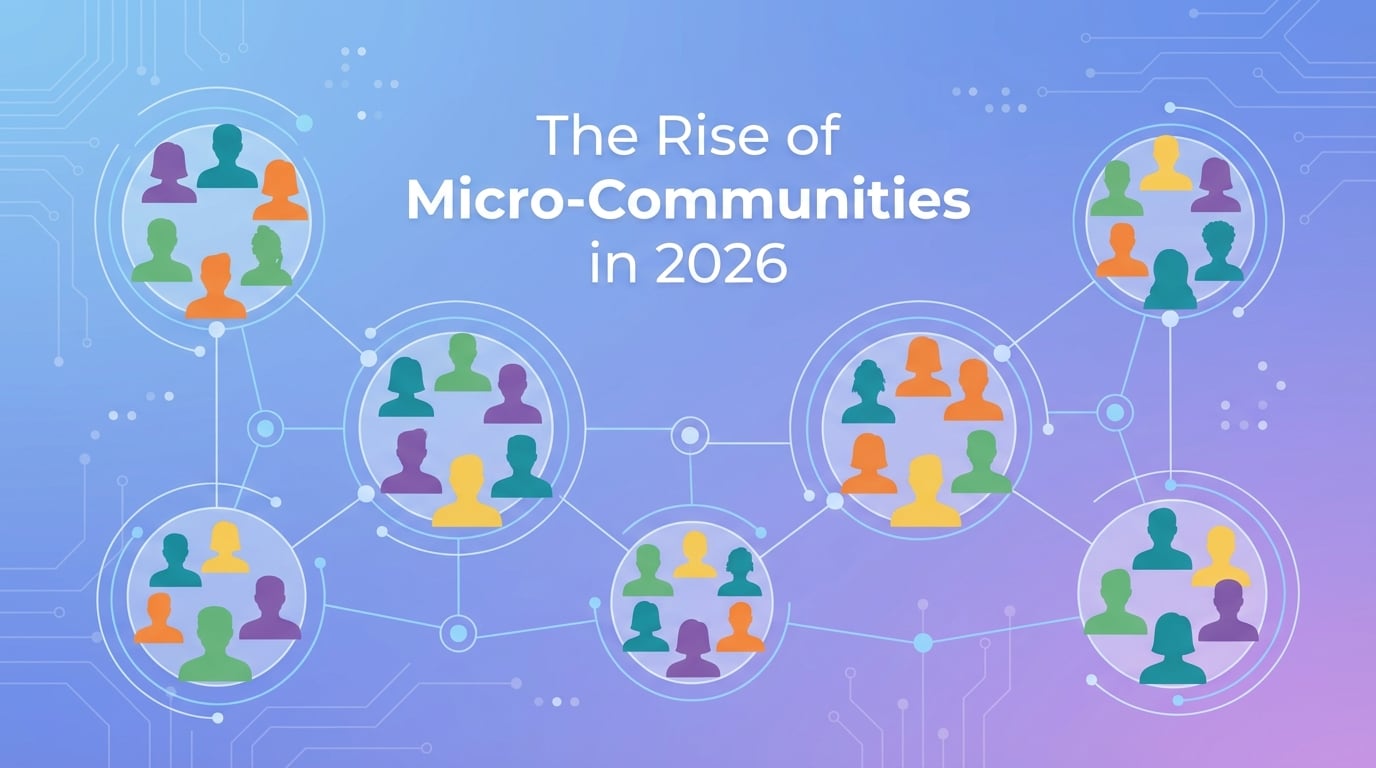
Micro-communities are small, focused groups of people united by shared interests, values, or goals. Unlike traditional social media platforms where you’re shouting into the void, micro-community marketing allows brands to foster genuine relationships with highly engaged audiences.
The numbers tell the story: engagement rates in micro-communities can be 10-20 times higher than on traditional social platforms. When you’re speaking to 500 passionate community members instead of 50,000 passive followers, every interaction counts.
The Business Case for Micro-Community Marketing
Building a micro-community isn’t just about warm feelings—it’s about measurable business results. Here’s what makes this strategy so powerful:
Higher Conversion Rates: Community members who feel connected to your brand are significantly more likely to become customers. They trust your recommendations because they’ve built relationships within your community.
Valuable Feedback Loop: A dedicated micro-community gives you direct access to your ideal customers. You can test ideas, gather feedback, and refine your offerings based on real insights from engaged users.
Organic Word-of-Mouth: Community members become brand advocates naturally. When someone finds value in your community, they share it with like-minded friends—giving you authentic, cost-effective marketing.
Reduced Customer Acquisition Costs: While building a community requires upfront investment, the long-term ROI is substantial. Community-driven growth is more sustainable and cost-effective than paid advertising.
How to Build Your Own Micro-Community: A Step-by-Step Guide
Step 1: Define Your Community’s Purpose and Niche
Start by identifying a specific problem, interest, or goal that unites your target audience. The more focused your niche, the stronger your community will be. Ask yourself:
- What unique value can I provide?
- What problem am I solving for my members?
- Who is my ideal community member?
Your community should serve a clear purpose beyond promoting your products. Focus on providing genuine value first.
Step 2: Choose the Right Platform
Not all platforms are created equal for micro-community marketing. Consider these options:
Discord: Excellent for real-time conversations and building tight-knit groups. Popular with tech-savvy audiences and younger demographics.
Circle: Purpose-built for community building with features like courses, events, and member directories.
Slack: Great for professional communities and B2B audiences who are already familiar with the platform.
Private Facebook Groups: Still relevant for certain demographics, though engagement has declined in recent years.
Your Own Platform: For maximum control and data ownership, consider building a custom community space on your website.
Choose based on where your audience already spends time and what features matter most for your community goals.
Step 3: Create Compelling Community Guidelines
Establish clear rules and expectations from day one. Your guidelines should:
- Define acceptable behavior and content
- Outline how members can contribute value
- Explain moderation policies
- Set the tone for interactions
Good guidelines create psychological safety, encouraging members to participate authentically.
Step 4: Seed Initial Content and Conversations
Don’t launch to an empty room. Before inviting members, create:
- Welcome posts explaining community benefits
- Discussion threads on key topics
- Resources, guides, or tools members will find valuable
- A clear onboarding process for new members
Your initial content sets the standard for quality and engagement.
Step 5: Recruit Your First Members Strategically
Quality matters more than quantity in micro-communities. Start by inviting:
- Existing customers who love your brand
- Email subscribers who engage with your content
- Social media followers who regularly comment and share
- Industry peers and thought leaders
Aim for 20-50 highly engaged founding members rather than hundreds of passive observers.
Step 6: Foster Engagement Through Active Moderation
A thriving community requires consistent attention. Your role as community manager includes:
- Posting regular discussion prompts
- Responding to member questions and comments
- Highlighting valuable member contributions
- Facilitating connections between members
- Organizing events, challenges, or collaborative projects
The most successful communities have active, visible leadership that models the behavior they want to see.
Step 7: Measure Success and Iterate
Track metrics that matter for micro-community marketing:
- Engagement rate: Percentage of members actively participating
- Response time: How quickly members reply to posts
- Member retention: How many members stay active over time
- Content quality: Depth and value of member contributions
- Business impact: Conversions, referrals, and revenue from community members
Use these insights to refine your strategy and double down on what works.
Common Mistakes to Avoid
Being Too Promotional: If every post is a sales pitch, members will disengage quickly. Follow the 80/20 rule: 80% value-driven content, 20% promotional.
Neglecting Moderation: Unmoderated communities quickly become spam-filled or toxic. Consistent moderation maintains quality and safety.
Ignoring Member Feedback: Your community members are telling you what they need. Listen and adapt accordingly.
Growing Too Fast: Rapid growth can dilute community culture. Prioritize quality engagement over vanity metrics.
Real-World Examples of Successful Micro-Communities
Indie Hackers: A community of entrepreneurs building profitable online businesses. Members share revenue numbers, challenges, and strategies in a supportive environment.
Notion Ambassadors: Notion’s community program creates micro-communities of power users who help each other master the tool while providing feedback to the company.
Peloton Groups: Beyond the main platform, Peloton users form micro-communities around specific interests—from new parents to competitive athletes—creating deeper connections.
These examples show how micro-community marketing works across different industries and business models.
The Future of Micro-Community Marketing
As we move through 2026, expect to see:
- AI-Powered Community Management: Tools that help moderators identify trending topics, surface valuable content, and maintain engagement at scale
- Integration with niche marketing: Communities becoming central hubs for content distribution and co-creation
- Monetization Evolution: More sophisticated ways to generate revenue from communities beyond simple membership fees
- Cross-Platform Communities: Members connecting across multiple platforms while maintaining a cohesive community identity
The brands that invest in building genuine micro-communities now will have a significant competitive advantage as traditional social media continues to fragment.
Getting Started Today
You don’t need a massive budget or technical expertise to start building your micro-community. Begin with these three actions:
- Identify your niche: Spend time understanding exactly who you want to serve and what unique value you can provide
- Choose your platform: Pick one platform and commit to it fully rather than spreading yourself thin
- Invite your first 10 members: Start small with your most engaged customers or followers
Remember, the goal isn’t to build the biggest community—it’s to build the most engaged one. Focus on creating genuine value and fostering authentic connections, and your micro-community will grow organically.
Conclusion
Micro-Community Marketing represents a fundamental shift in how brands connect with audiences. By focusing on depth over breadth, quality over quantity, and relationships over transactions, you can build a community that drives real business results while creating genuine value for members.
The rise of micro-communities isn’t just a trend—it’s a return to what marketing should have been all about: building meaningful relationships with people who care about what you do.
Ready to start building your micro-community? The best time to begin was yesterday. The second-best time is today.
Want more strategies for modern digital marketing? Check out our guides on email marketing and content strategy to complement your community-building efforts.